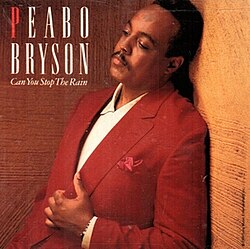
Can You Stop The Rain
Peabo Bryson
Columbia
1991

Can You Stop the Rain, released in 1991, is one of Peabo Bryson’s most critically acclaimed and commercially successful albums. This emotionally rich and sonically polished project marked a high point in Bryson’s career, further cementing his reputation as a premier balladeer of contemporary R\&B and adult soul.
~Awesome DJ
*Can You Stop the Rain* is a 1991 studio album by American R&B and soul singer Peabo Bryson. The album represents an important period in Bryson’s career and highlights the romantic, emotional style that had become closely associated with his music. It combines smooth R&B production with heartfelt ballads, giving Bryson plenty of room to showcase his rich and expressive voice.
The title song, “Can You Stop the Rain,” is one of the album’s most memorable recordings. The song uses the image of rain as a metaphor for emotional pain and the difficulties that can come with love and heartbreak. Bryson’s passionate delivery gives the song a deeply reflective quality, allowing the listener to connect with its themes of sadness, longing, and the desire for emotional healing.
Throughout the album, Bryson demonstrates his ability to move between tender love songs and more contemporary R&B arrangements. His vocal performances are controlled but powerful, emphasizing emotion rather than simply vocal technique. The production also reflects the polished sound of early-1990s R&B, combining keyboards, rhythms, backing vocals, and orchestration to create a sophisticated atmosphere.
*Can You Stop the Rain* also reflects Bryson’s success as a romantic balladeer. By this point in his career, he had become widely recognized for songs centered on love, relationships, and emotional vulnerability. The album builds on that reputation while showing that his music could adapt to the changing R&B sound of the early 1990s.
Overall, *Can You Stop the Rain* is a strong representation of Peabo Bryson’s musical identity. Its combination of soulful vocals, romantic themes, and polished production makes it an album that illustrates why Bryson remained an important voice in R&B. For listeners exploring his discography, the album provides a meaningful look at his artistry during the early 1990s.
~AI